How Do You Tell If You Have a Parasite? Signs, Testing, Biofilm, and What to Do
How do you tell if you have a parasite? Learn common signs and symptoms, why stool testing can miss parasites, how parasites interact with heavy metals and biofilm, and why preventive parasite cleansing may be worth considering as part of a proactive wellness routine.

Parasites are often thought of as something that only happens in developing countries or after international travel. But living in the United States or Canada doesn't make us immune to parasite exposure.
We eat food from around the world, interact with animals, swim in lakes and pools, travel, and encounter potential exposures through food, water, soil, and other people.
So, how do you tell if you have a parasite? Sometimes there are obvious clues. Other times, symptoms can be vague, and testing isn't always straightforward.
Table of Contents
- Who Is This Article For?
- How Do You Tell If You Have a Parasite?
- Common Signs and Symptoms of Parasites
- How Do People Get Parasites?
- The Connection Between Parasites and Heavy Metals
- Parasites and Biofilm
- How Do You Test for Parasites?
- Should You Consider Preventive Parasite Cleansing?
- Supporting Your Body During a Parasite Cleanse
- Frequently Asked Questions
- Final Thoughts
Who Is This Article For?
This guide is for anyone researching parasite symptoms in humans, intestinal parasites, parasite testing, deworming, or natural parasite cleansing.
Maybe you're dealing with unexplained digestive symptoms, fatigue, nighttime itching, or changes in your stool. Or perhaps you're simply questioning the assumption that parasites aren't something people in Western countries need to think about.
How Do You Tell If You Have a Parasite?
There isn't one symptom or test capable of identifying every human parasite.
Possible clues include your symptoms, and evaluating your exposure through food, water, travel, soil, contact with animals, or changes in your stool.
It's important to know that a negative stool test does NOT mean you don't have parasites. Parasites, eggs, or cysts may not be present in every specimen, and detection depends on the organism, timing, collection method, and laboratory technique.

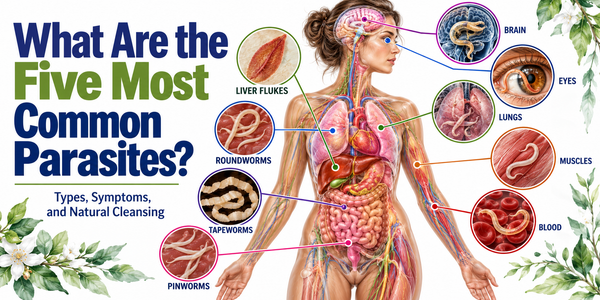
Common Signs and Symptoms of Parasites
Parasite symptoms in humans vary depending on the organism and where it is located.
Possible signs include:
- Abdominal pain or cramping
- Gas and bloating
- Diarrhea or changing bowel habits
- Nausea
- Unexplained weight loss
- Anal itching, particularly at night
- Disturbed sleep
- Fatigue
- Changes in appetite
- Nutritional deficiencies
- Unusual material in the stool
Some people can also have a parasitic infection without obvious symptoms.
How Do People Get Parasites?
Depending on the organism, parasites may be acquired through:
- Contaminated food or water
- Raw or undercooked meat or fish
- Unwashed produce
- Contaminated soil
- Fecal contamination
- Animals
- Insects
- Person-to-person transmission
- International travel
Our food system is increasingly global, with produce, seafood, and meat traveling enormous distances before reaching our kitchens.
Modern sanitation and food-safety practices reduce many risks, but they don't eliminate parasite exposure or foodborne illness.

The Connection Between Parasites and Heavy Metals
There is scientific research demonstrating a relationship between parasites and heavy metals.
Researchers have found that certain parasites can accumulate and concentrate heavy metals within their tissues. This ability has been significant enough that parasites have been investigated as biological indicators of heavy-metal pollution.
The scientific review “Parasites as Accumulation Indicators of Heavy Metal Pollution” discusses the ability of certain parasites to accumulate metals from their hosts. Research has found particularly notable accumulation among certain intestinal helminths, including cestodes and acanthocephalans.
Another study examining parasitic nematodes found that concentrations of all six metals investigated were higher within the parasites than in the muscle tissue of their hosts, with parasite-to-host concentration ratios ranging from approximately 3 to 122.
These findings demonstrate an important relationship between parasites, heavy metals, environmental toxins, and the host environment.
Parasites and Biofilm
Biofilm is another important piece of the parasite conversation.
Biofilms are organized communities of microorganisms surrounded by a protective extracellular matrix that can help microorganisms adhere to surfaces and persist within an environment.
Scientific research has demonstrated interactions between parasites and microbial biofilms, including interactions between protozoan parasites and bacterial communities within biofilms.
The intestinal tract is a complex ecosystem containing bacteria, fungi, mucus, metabolites, and other microorganisms. When parasites are present, they become another part of that ecosystem.
This is why gut health, bowel regularity, biofilm, detoxification, and environmental exposures can all be relevant pieces of the broader conversation.
How Do You Test for Parasites?
There is no universal test for every parasite, but let's talk about the options.
Stool Testing
Stool ova-and-parasite testing can detect certain intestinal parasites, but stool testing is inconsistent.
Parasites may shed intermittently, meaning eggs, cysts, or organisms aren't necessarily present in every sample. Multiple specimens or more targeted antigen or molecular testing may sometimes provide additional information.
Therefore, a negative stool test doesn't rule out parasites.
Other Parasite Testing
Depending on the level of exposure and suspected parasite, testing potentially may include blood tests, antibodies, antigen testing, PCR, imaging, or other organism-specific methods but can produce non-specific results.
What About the Milk Test?
The milk test is a home-based method in which a person sits in a bath containing milk and watches for material believed to be parasites to leave the body.
(It is a home observation method rather than a laboratory diagnostic test and hasn't been "scientifically validated for diagnosing" parasitic infections.)

Should You Consider Preventive Parasite Cleansing?
I personally believe in taking a preventive approach rather than waiting until I believe parasites have become a major problem.
Routine preventive deworming is practiced in many parts of the world. Meanwhile, the idea that modern Western sanitation makes parasite exposure irrelevant overlooks our global food supply, travel, pets, soil exposure, contaminated water, and continuing foodborne illness outbreaks.
For these reasons, I personally do a parasite cleanse approximately twice per year as part of my preventive wellness routine.
Supporting Your Body During a Parasite Cleanse
My parasite-cleansing routine includes a concentrated herbal blend containing clove, black walnut hull, and wormwood, along with ginger extract and barberry root.
I prioritize elimination and detox pathways during a cleanse:
- Drink plenty of clean, filtered water
- Maintain regular bowel movements
- Walk and move daily
- Support lymphatic drainage through movement or lymphatic massage
- Use sauna or detox baths when appropriate
- Get adequate sleep
I also incorporate zeolite as a binder during my personal detox and deworming routine.
Frequently Asked Questions
Can You Have Parasites Without Knowing It?
Yes. Some parasitic infections cause few or no obvious symptoms.
Does a Negative Stool Test Mean I Don't Have Parasites?
No. Detection can vary because of intermittent shedding, specimen timing, laboratory technique, and the parasite involved. Additional samples or another testing method may sometimes identify something an initial specimen missed.
Are Parasites Connected to Heavy Metals?
Research demonstrates that certain parasites can accumulate heavy metals, sometimes at substantially greater concentrations than surrounding host tissues.
What Does Biofilm Have to Do With Parasites?
Research has demonstrated interactions between parasites and microbial biofilms. Biofilms form protective microbial communities, making them an important part of understanding the complex intestinal environment.
Should I Do a Parasite Cleanse If I Have Symptoms?
If you suspect parasites, don't assume one negative stool test settles the question. Personally, I don't wait for symptoms. I incorporate a parasite cleanse approximately twice per year as part of my preventive wellness routine.
Persistent or serious symptoms should still be investigated because many conditions can resemble parasite symptoms.
Final Thoughts
So, how do you tell if you have a parasite? Look at the entire picture: symptoms, exposures, changes in your body, heavy metal accumulation, and occasionally testing.
A negative stool test doesn't exclude every parasite, and living in a developed country doesn't eliminate potential exposure through food, water, animals, soil, and travel.
Research also demonstrates important connections involving parasites, heavy metals, and microbial biofilms.
For me, prevention means reducing environmental exposures, supporting my body's elimination pathways, and incorporating detoxing and deworming approximately twice per year rather than waiting until I believe I have a problem (or assuming I don't have parasites).
If you'd like to learn more about detox and deworming protocol I personally follow, including the products I use to support detoxification and mineral replenishment, visit LowToxQueen.com for my free guide.
Disclaimer
This article is for educational purposes only and includes my personal wellness practices. It is not medical advice or intended to diagnose, treat, cure, or prevent disease. The milk test is a home-based method and is not a validated diagnostic test. Herbal products can cause side effects and interact with medications. Consult a qualified healthcare professional for persistent or serious symptoms and before beginning herbs or supplements, particularly during pregnancy, breastfeeding, childhood, or when managing a medical condition.
Affiliate Disclosure
Some of the links on this website are affiliate links, of which I am an independent rep, and means I may earn a small commission if you choose to make a purchase through them, at no additional cost to you. I only recommend products and resources that I personally use, trust, or believe may be beneficial to my readers. Your support helps me continue creating free educational content. Thank you!