What Is Heavy Metal Poisoning? Symptoms, Causes, Exposure and What to Do
Learn what heavy metal poisoning is, how exposure happens, and the symptoms to watch for. Discover common toxic heavy metals, potential sources, testing, ways to reduce everyday exposure, and practical steps to support your body’s natural detoxification and elimination processes.
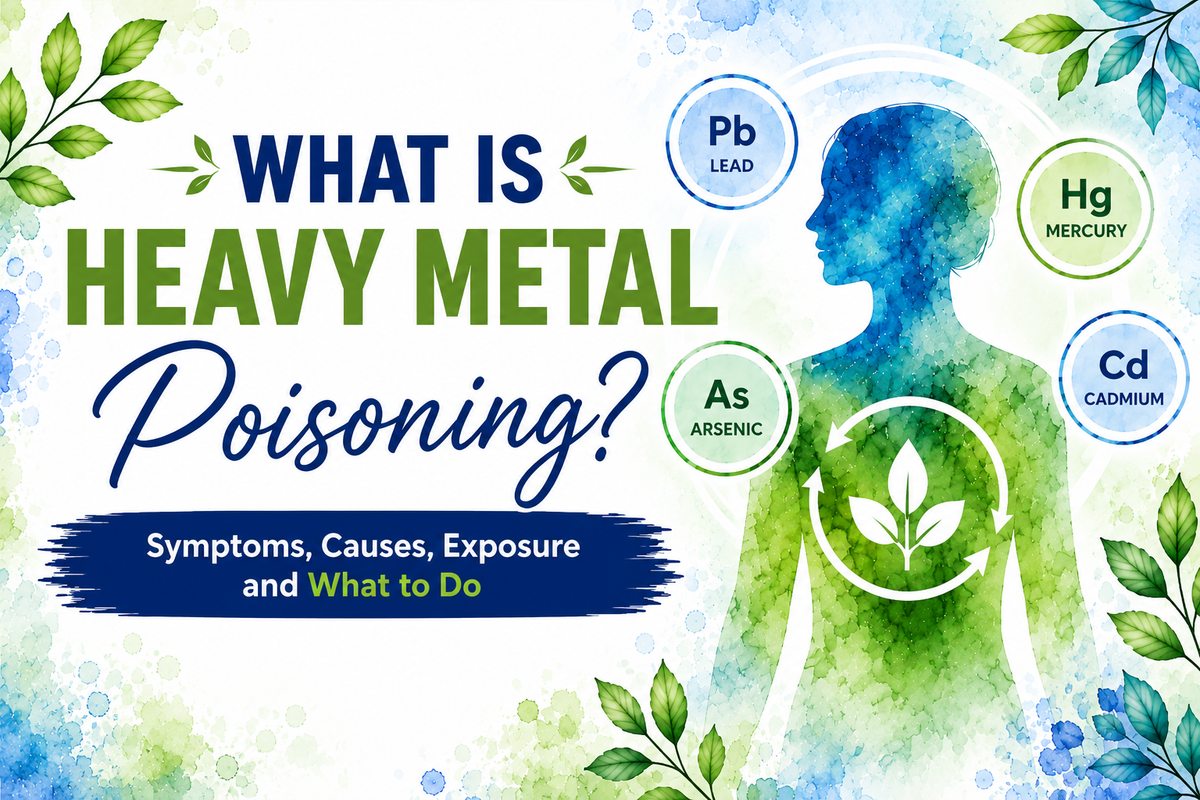
Heavy metals occur naturally in the environment, but exposure can also come from contaminated drinking water, food, household dust, certain consumer products, tobacco smoke, and industrial or occupational environments. Metals such as lead, mercury, arsenic, and cadmium can become toxic when exposure is high enough.
So, what is heavy metal poisoning, and how is it different from simply being exposed to heavy metals?
Heavy metal poisoning occurs when a toxic metal accumulates or enters the body at a level capable of causing harmful effects. The symptoms and severity can vary considerably depending on the specific metal, amount, route of exposure, and whether the exposure happened suddenly or gradually over months or years.
Understanding where exposure comes from, recognizing potential symptoms, and knowing when testing is appropriate are important first steps.
Table of Contents
Who Is This Article For?
This article is for anyone researching heavy metals in the body, possible sources of exposure, or heavy metal toxicity symptoms.
Maybe you've been experiencing unexplained symptoms and are wondering whether environmental exposures could be playing a role. Or perhaps you're simply becoming more aware of heavy metals in food, water, and everyday life and want to understand how to reduce your exposure.
It's important to remember that symptoms such as fatigue, brain fog, headaches, and digestive problems can have many causes. Symptoms alone cannot tell you whether you have heavy metal poisoning.
What Is Heavy Metal Poisoning?
Heavy metal poisoning, sometimes called heavy metal toxicity, occurs when exposure to a toxic metal reaches levels that interfere with normal biological functions and cause adverse health effects.
Not every exposure equals poisoning.
We encounter small amounts of various metals in our environment, and the potential for harm depends on factors such as dose, duration, chemical form, route of exposure, and individual susceptibility. For example, arsenic toxicity can differ substantially depending on whether exposure is acute or occurs at lower levels over many years.
Some metals can also accumulate in tissues with repeated exposure, making identifying and reducing the source particularly important.
Which Heavy Metals Can Be Toxic?
Several metals and metalloids are associated with human toxicity. Four commonly discussed examples are:
- Lead
- Mercury
- Arsenic
- Cadmium
In fact, lead, arsenic, and cadmium currently rank first, second, and third on ATSDR's Substance Priority List, which considers a substance's frequency at National Priorities List sites, toxicity, and potential for human exposure.
Different metals affect the body differently. Mercury, for example, is well known for its potential neurological effects, while long-term inorganic arsenic exposure has been associated with neurological, cardiovascular, skin, and other health effects.
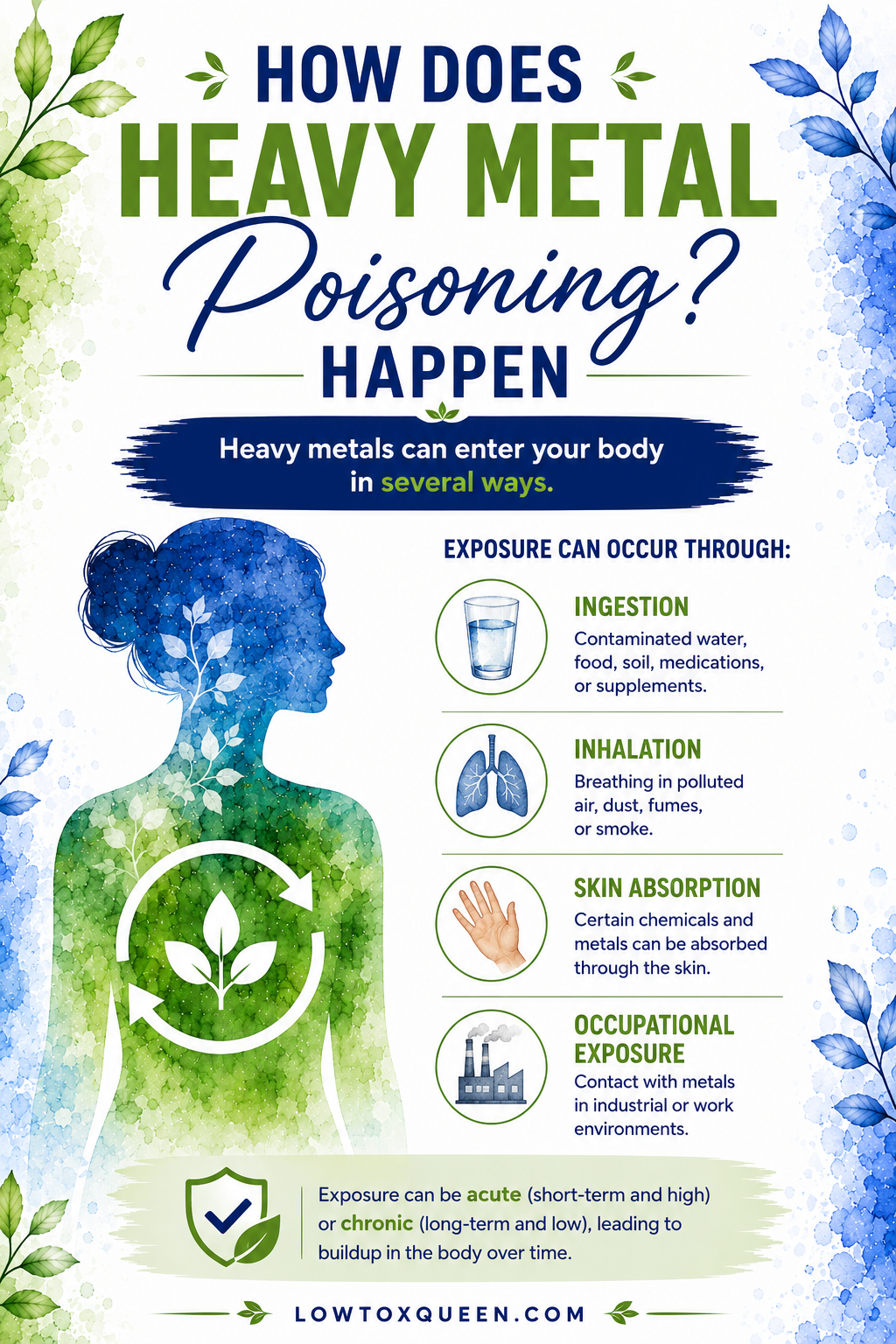
How Does Heavy Metal Poisoning Happen?
Heavy metals can enter the body through ingestion, inhalation, and certain environmental or occupational exposures.
Potential sources include:
- Contaminated drinking water
- Certain fish and seafood
- Old lead-based paint and household dust
- Contaminated soil
- Tobacco smoke
- Industrial or occupational exposure
- Certain imported foods, spices, cosmetics, or traditional remedies
- Some contaminated supplements or consumer products
Exposure can be acute, meaning a relatively large exposure happens over a short period, or chronic, where smaller exposures continue over months or years.
Arsenic is a good example. Acute inorganic arsenic poisoning can produce severe gastrointestinal illness and potentially multisystem organ dysfunction, while chronic exposure may remain unnoticed for years before characteristic health effects become apparent.
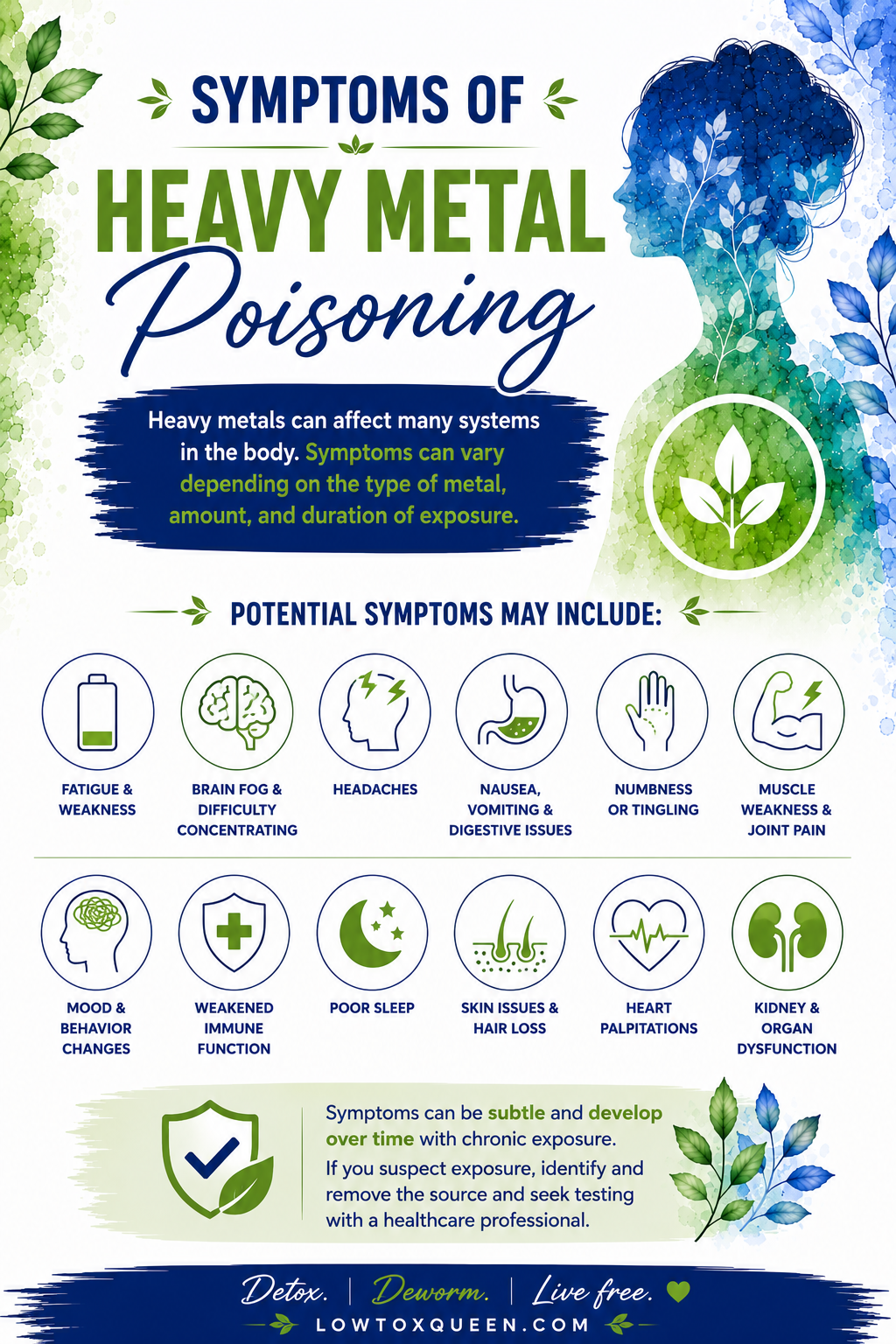
Symptoms of Heavy Metal Poisoning
There isn't one universal list of heavy metal poisoning symptoms because different metals affect different organs and systems.
Depending on the metal and exposure, symptoms may include:
- Abdominal pain
- Nausea or vomiting
- Diarrhea
- Headaches
- Fatigue or weakness
- Difficulty concentrating
- Memory or cognitive changes
- Numbness or tingling
- Muscle weakness
- Tremors
- Mood or behavioral changes
- Kidney or other organ problems
For example, chronic arsenic exposure can cause characteristic skin changes and peripheral neuropathy, while acute exposure can cause severe gastrointestinal and cardiovascular effects.
These symptoms can also occur with many unrelated conditions, which is why symptoms alone should not be used to diagnose heavy metals toxicity.
What to Do If You're Concerned About Heavy Metals
If you suspect significant exposure, the first priority isn't to immediately start a heavy metal detox cleanse. It's to identify what you're dealing with.
Identify and Reduce the Exposure
Consider your drinking water, workplace, home, food, hobbies, supplements, and other possible sources.
If water is a concern, testing your water and using an NSF-certified water filter designed for the specific contaminant can help reduce continued exposure.
Talk With a Healthcare Professional About Testing
Testing should be selected according to the metal and suspected exposure. A healthcare professional or medical toxicologist can determine which type of testing is appropriate and interpret the results in context.
Support Your Everyday Detox Pathways
For general wellness, you can also support the body's normal elimination systems by:
- Drinking plenty of filtered water
- Maintaining regular bowel movements
- Eating adequate fiber
- Moving your body and supporting lymphatic flow
- Using lymphatic massage when appropriate
- Prioritizing sleep
- Using sauna or detox baths when appropriate
These practices support normal elimination, but they are not substitutes for medical treatment of confirmed poisoning.
Maintain Good Mineral and Nutritional Status
Nutrient-dense foods provide the vitamins, minerals, protein, fiber, and antioxidants the body needs for normal physiological processes.
Some people also use fulvic minerals before or alongside their wellness and detox routines to provide trace mineral support.
What About Zeolite?
Some people incorporate purified zeolite as a binder in their heavy metal detox routine. Zeolite has adsorptive properties and certain forms can bind some metals in gastrointestinal or laboratory settings.
However, a supplement should not be confused with medical treatment for diagnosed heavy metal poisoning. If testing shows clinically significant poisoning, treatment should be directed by a healthcare professional.
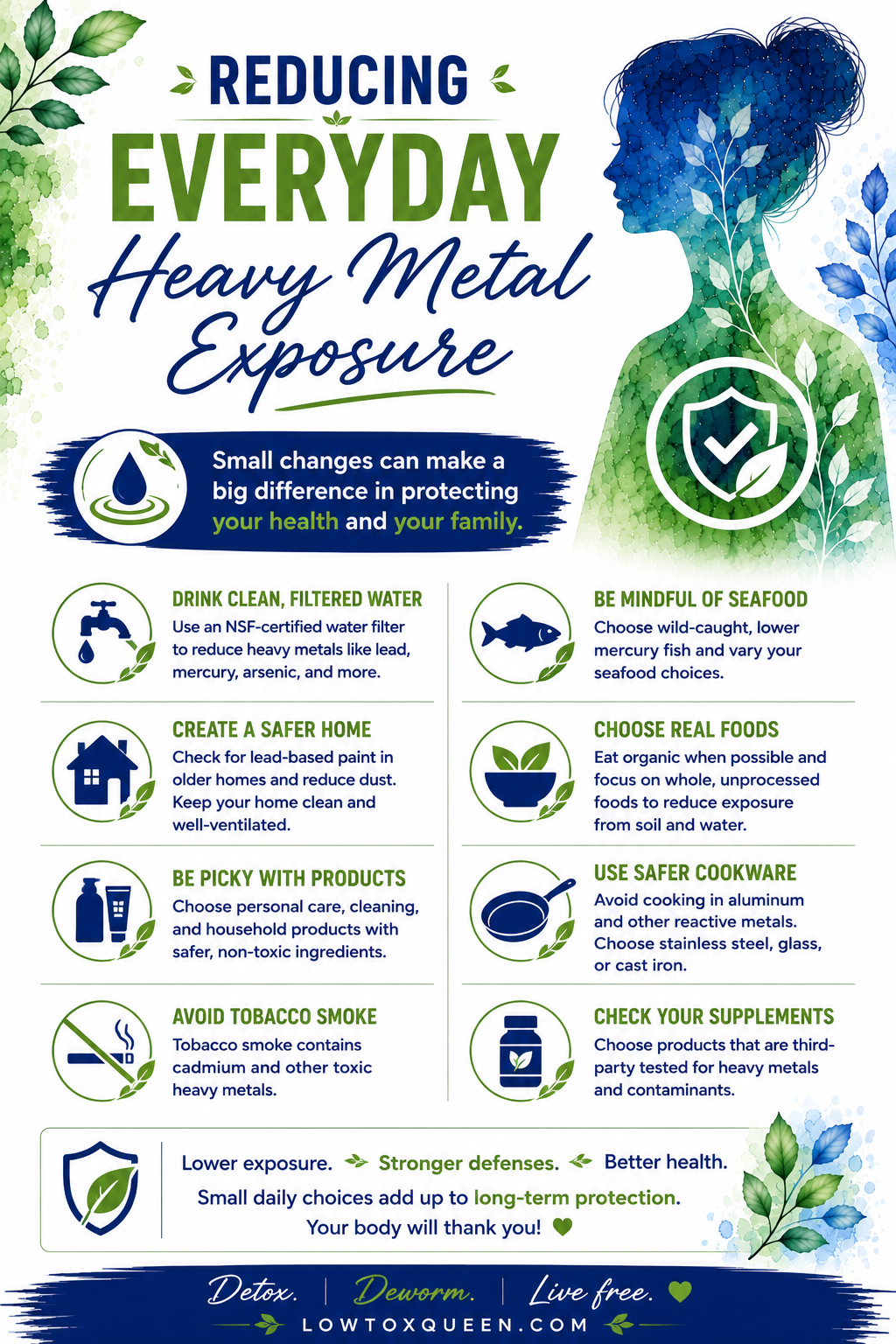
Reducing Everyday Heavy Metal Exposure
Even if you don't have heavy metal poisoning, reducing unnecessary exposure can be part of a lower-tox lifestyle.
Start with the basics: drink clean filtered water, pay attention to seafood choices, choose reputable supplements that undergo independent testing, reduce exposure to tobacco smoke, and investigate potential sources of lead in older homes.
A water ionizer can also be used to produce hydrogen-rich water. Molecular hydrogen (H₂) is being studied for its antioxidant properties and potential effects on oxidative stress. Hydrogen-rich water isn't a treatment for heavy metal poisoning, but some people include it as part of their broader wellness routine.
For everyday wellness, think of this as a long-term strategy: reduce what's coming in while supporting the systems your body already uses to eliminate waste.
Frequently Asked Questions
What is heavy metal poisoning?
Heavy metal poisoning occurs when exposure to a toxic metal reaches a level capable of causing harmful effects in the body. The effects depend on the metal, dose, duration, route of exposure, and individual susceptibility.
What are the most common toxic heavy metals?
Lead, mercury, arsenic, and cadmium are among the toxic metals most frequently discussed in environmental health.
Can heavy metal poisoning cause brain fog?
Some toxic metals can affect the nervous system and cognition, but brain fog is nonspecific and has many possible causes. It cannot diagnose heavy metal toxicity.
How do you test for heavy metal poisoning?
Testing depends on the suspected metal and exposure. Blood or urine testing may be appropriate in some circumstances, but testing and interpretation should be guided by a qualified healthcare professional.
Can heavy metal poisoning be treated?
Yes. Treatment depends on the metal and severity of exposure. In certain confirmed poisonings, prescription chelation therapy may be appropriate. The FDA states that approved chelation therapies require a prescription and medical supervision because chelation can carry serious risks.
Is a heavy metal detox the same as treating heavy metal poisoning?
No. Lifestyle practices and supplements marketed for general detox support are not equivalent to medical treatment for poisoning. Confirmed heavy metal poisoning may require specific medical management.
Final Thoughts
Understanding what is heavy metal poisoning starts with recognizing the difference between everyday exposure and clinically significant toxicity.
Heavy metals such as lead, mercury, arsenic, and cadmium can cause serious health effects at sufficient exposure levels. But symptoms alone don't tell you whether heavy metals are the cause.
If you suspect a significant exposure, identify and reduce the source and seek appropriate testing. For everyday wellness, focus on clean filtered water, nutrient-dense foods, regular bowel movements, movement and lymphatic flow, good sleep, healthy mineral status, and reducing unnecessary environmental exposures.
Natural products such as zeolite and fulvic minerals may have a place in a broader wellness routine, but they shouldn't delay appropriate evaluation or medical treatment when true heavy metal poisoning is suspected.
If you'd like to learn more about the simple detox protocol I personally follow, visit LowToxQueen.com for my free step-by-step detox and deworming guide.
Disclaimer
This article is for educational purposes only and is not intended to diagnose, treat, cure, or prevent heavy metal poisoning or any disease. Heavy metal poisoning can be serious and may require medical testing and treatment. Consult a qualified healthcare professional if you suspect significant exposure or before beginning a supplement or detox protocol.
Affiliate Disclosure
Some links on this website may be affiliate links. If you purchase through one of these links, I may earn a small commission at no additional cost to you. I only recommend products and resources that I personally use, trust, or believe may benefit my readers.