What Are Symptoms of Heavy Metals in the Body?
Could heavy metals be contributing to your fatigue, brain fog, headaches, digestive issues, or low energy? Learn the most common symptoms of heavy metals in the body, why toxic metals can build up over time, and natural ways to support your body's detoxification pathways.
Modern life exposes us to more toxins than ever before. From contaminated water and processed foods to pollution and household products, toxic heavy metals can enter the body through multiple pathways. While the body has natural detoxification systems, ongoing exposure may cause some people to wonder whether heavy metals in the body could be contributing to unexplained symptoms.
If you've been struggling with fatigue, brain fog, headaches, digestive issues, or other health concerns, understanding the signs of heavy metal toxicity may be an important first step.
Table of Contents
What Are Heavy Metals?
Heavy metals are naturally occurring elements found in the environment. While some metals are essential in small amounts, others can become problematic when they accumulate in the body.
Common toxic heavy metals include:
- Lead
- Mercury
- Arsenic
- Cadmium
- Aluminum
Exposure may occur through food, drinking water, air pollution, personal care products, cookware, pesticides, and other environmental sources.
Who Is This Article For?
This article is for anyone who feels like something is "off" but hasn't found clear answers. Maybe you're dealing with ongoing fatigue, brain fog, poor concentration, digestive discomfort, or low energy despite making healthy choices. It's also for parents and grandparents who want to better understand environmental toxins and how they may affect long-term wellness. While symptoms alone cannot diagnose heavy metals toxicity, learning about potential signs can help you make informed decisions about your health.
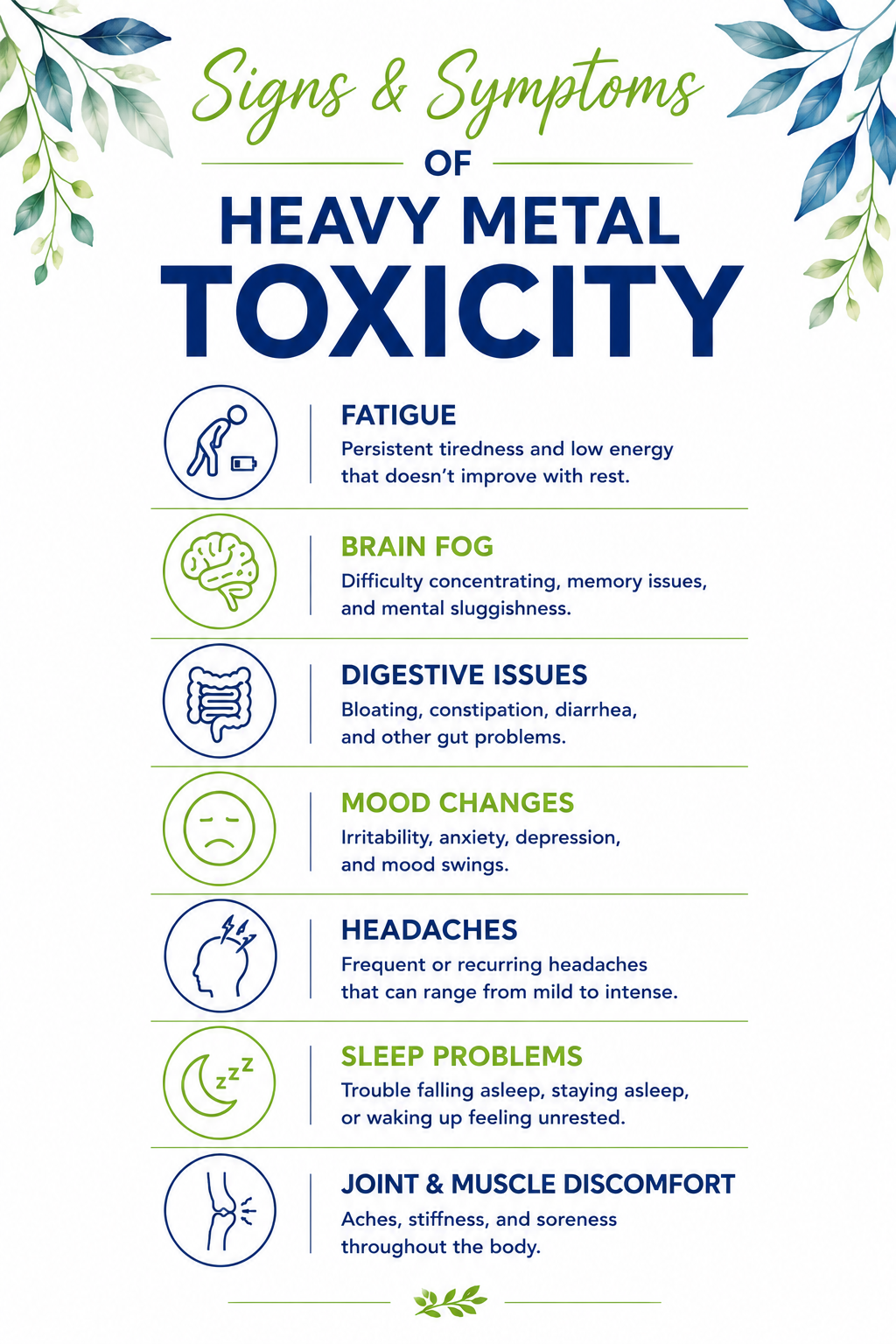
Common Heavy Metal Toxicity Symptoms
One challenge with heavy metals toxicity symptoms is that they often overlap with other conditions. Many people experience symptoms for years without ever considering environmental toxins as a possible contributor.
Fatigue
One of the most common metal toxicity symptoms is persistent fatigue. People often describe feeling exhausted despite getting adequate sleep.
Brain Fog
Brain fog is frequently associated with heavy metals in the body. Symptoms may include difficulty concentrating, forgetfulness, mental sluggishness, and trouble staying focused.
Digestive Issues
Bloating, constipation, diarrhea, and other digestive complaints are commonly reported by individuals investigating toxic heavy metals.
Headaches
Recurring headaches may be another sign of heavy metal toxicity. Some individuals notice headaches becoming more frequent as their toxic burden increases.
Mood Changes
Irritability, anxiety, low motivation, and mood fluctuations are often discussed among those researching heavy metals toxicity.
Sleep Problems
Difficulty falling asleep, staying asleep, or waking up feeling refreshed can sometimes accompany toxic metal accumulation.
Joint and Muscle Discomfort
Some people report generalized aches, stiffness, and muscle discomfort when dealing with long-term toxin exposure.
Low Energy and Poor Recovery
If you feel drained after exercise, struggle to recover from stress, or experience ongoing low energy, it may be worth exploring factors that could be impacting your body's natural detoxification pathways.
Signs of Heavy Metal Toxicity
Although symptoms vary from person to person, common signs of heavy metal toxicity may include:
- Chronic fatigue
- Brain fog
- Frequent headaches
- Digestive issues
- Mood changes
- Sleep disturbances
- Joint discomfort
- Difficulty concentrating
- Poor memory
- General feelings of poor wellness
Because these symptoms are common to many health conditions, it's important to work with a qualified healthcare provider when investigating potential causes.
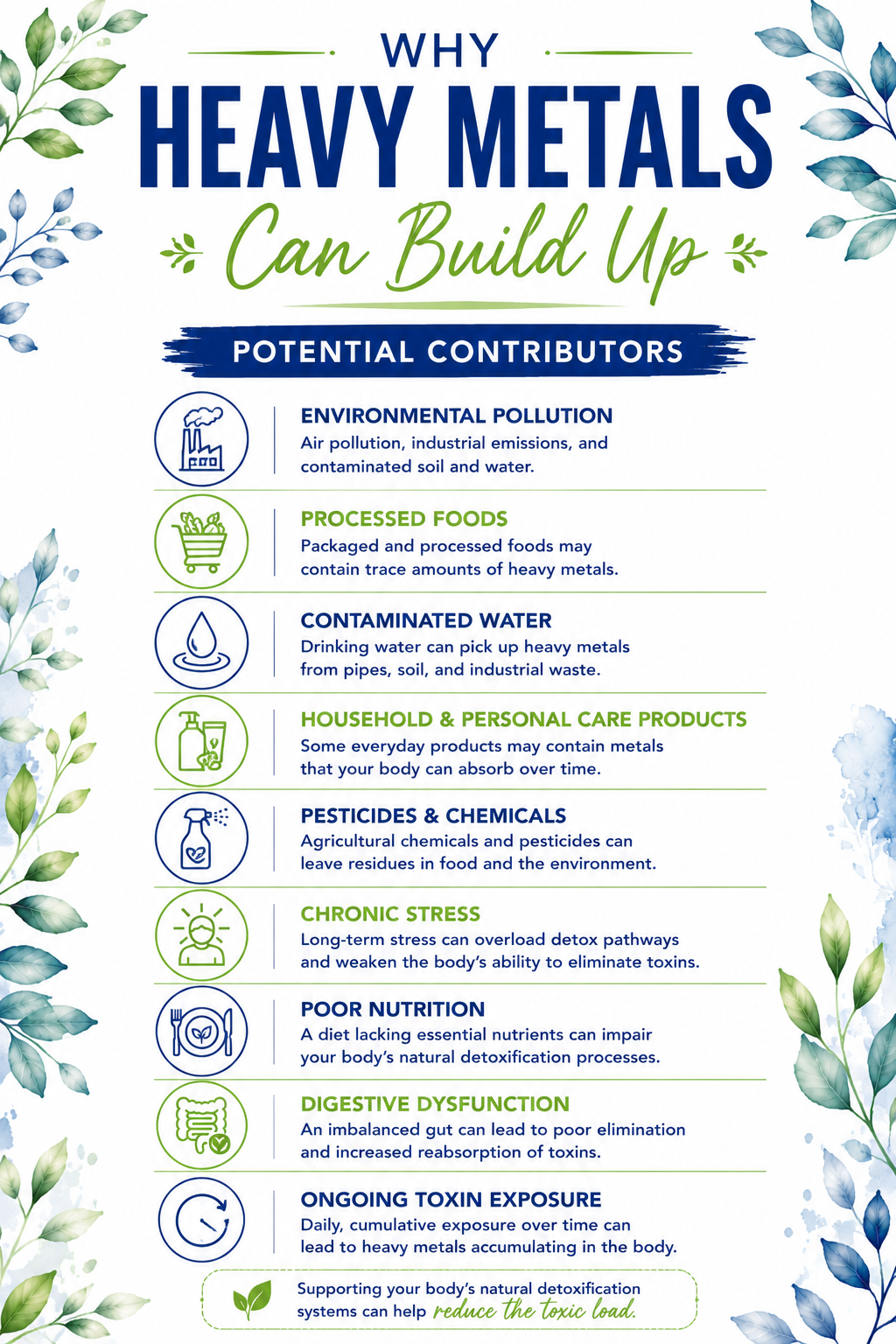
Why Heavy Metals Can Build Up
The body naturally eliminates toxins through the liver, kidneys, digestive system, lymphatic system, and skin.
However, modern exposure levels may place a greater burden on these systems than many people realize.
Potential contributors include:
- Environmental pollution
- Processed foods
- Contaminated water
- Chronic stress
- Poor nutrition
- Digestive dysfunction
- Ongoing toxin exposure
As a result, many people become interested in heavy metals detoxification and ways to support the body's natural elimination processes.
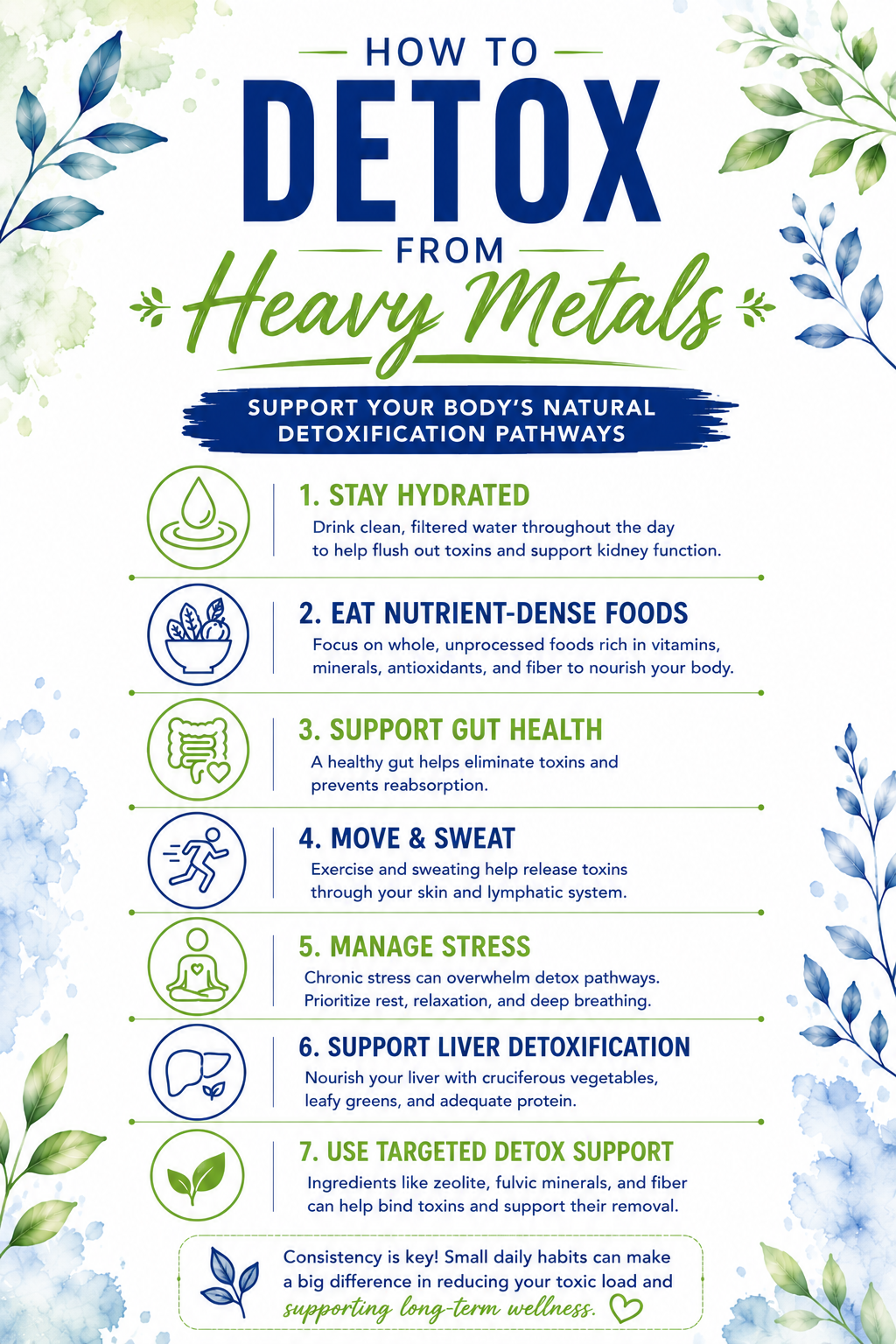
How to Detox From Heavy Metals
When people talk about a Heavy Metal Detox Cleanse or Metal Detox Cleanse, they are generally referring to lifestyle practices that support the body's normal detoxification pathways.
Common approaches include:
Stay Hydrated
Clean water helps support normal elimination processes and overall wellness.
Eat Nutrient-Dense Foods
Whole foods rich in vitamins, minerals, antioxidants, and fiber may help support detoxification.
Support Gut Health
A healthy digestive system plays an important role in eliminating waste and toxins.
Move and Sweat
Exercise and sweating are commonly included in detoxing heavy metals strategies.
Consider Targeted Detox Support
Many people use Heavy Metal Detox Ingredients such as zeolite clinoptilolite, fulvic minerals, fiber, and other detox-supporting compounds as part of their wellness routine.
While no toxic metal cleanse can replace healthy lifestyle habits, supporting your body's natural detoxification systems may help promote overall well-being.
Frequently Asked Questions
What are the most common heavy metal toxicity symptoms?
Fatigue, brain fog, digestive issues, headaches, sleep disturbances, mood changes, and joint discomfort are among the most commonly reported symptoms.
What are the most common heavy metal toxicity symptoms?
Fatigue, brain fog, digestive issues, headaches, sleep disturbances, mood changes, and joint discomfort are among the most commonly reported symptoms.
How do heavy metals get into the body?
Exposure may occur through food, water, air pollution, household products, personal care products, and environmental contaminants.
How can I detox heavy metals naturally?
Many people focus on hydration, nutrition, gut health, movement, sweating, and targeted detox support to help support the body's natural detoxification pathways.
What is a Heavy Metal Cleanse?
A Heavy Metal Cleanse is a wellness approach designed to support the body's ability to remove unwanted toxins and maintain healthy detoxification processes.
How do I know if I have heavy metals in my body?
Symptoms alone cannot determine whether heavy metals are present. Laboratory testing and guidance from a qualified healthcare provider may help provide more information.
Final Thoughts
Heavy metals are an unavoidable part of modern life. While exposure does not automatically mean toxicity, understanding the potential signs of heavy metal toxicity can help you make informed decisions about your health.
If you're interested in learning more about detoxing from heavy metals and the simple detox protocol I personally follow, visit LowToxQueen.com for my free step-by-step guide.
Disclaimer: This article is for educational purposes only and is not intended to diagnose, treat, cure, or prevent any disease. Always consult a qualified healthcare professional regarding medical concerns.
Affiliate Disclosure: I may earn a small commission from some of the products mentioned in this article if you purchase through my links, at no additional cost to you. I only share products that I use, trust, and genuinely believe can support your health journey.